
Search the Community
Showing results for tags '1/24'.
-
Hello all. I present for inspection my completed 1/24 Kinetic P-47D, built mostly out of the box but with a few additional aftermarket parts: Airscale USAAF Seatbelts DefModel Wheel Set (DS24001) Master Detail Set (Blast Tubes, Gunsight and Pitot Tube) Techmod Decals Yahu Instrument Panel The inspiration for this build is this picture: This is 42-25864 HV-A of the 61st Fighter Squadron, 56th Fighter Group as it does a low pass over 100th Bomb Group B17 Fortresses at Thorpe Abbotts in Norfolk. It caught my attention because I grew up in the same area, spent a lot of my childhood on and around the old base and even worked the same land for a local farmer in my teens... so I feel like I have a bit of affinity with the place and the 100th. The old control tower has also been restored and is a fantastic place to visit as it keeps the memories alive: https://www.100bgmus.org.uk/ The kit itself is a re-box of the Vintage Fighter Series P-47D, and aside from a lack of engine detail and poor instructions I have very few criticisms of it. Anyway, enough waffle... here it is: And here, for a size comparison here it is in my display cabinet alongside my 1/24 Mustang. I'm aware that I should probably have used yellow chromate instead of green for the wheel wells and undercarriage doors. This mistake is my own. The build thread can be found here: As always, thanks for looking.
-
Having just completed my 1/24 Mustang I was inspired to build another American fighter, and what better than the mighty P-47D Thunderbolt? In my stash of 1/24 kits I've got both the Kinetic Razorback version and the Vintage Fighter Series (VFS) Bubbletop variant. VFS was a small, short‑lived UK model kit business that appeared in the early 2000s and then disappeared relatively quickly. As far as I know they only produced two kits - the P-40 and P-47, both in 1/24 scale. When it ceased trading Kinetic bought the moulds for the P-47 and re-released it, hence its availability. Although this will be mostly an out-of-box build I'm not overly keen on the "Squirt II" markings for this kit and will therefore be looking at alternative markings - and probably something that was based near to where I grew up in Norfolk. So here is the box on the bench. Like the kit, it is big: And here is a little progress so far on the engine. The push rods don't quite connect in some places. I've placed the better of the two parts at the front. Also it is important to get the cylinders the right way around. The instructions will have you do it wrong. You also need to be aware that the locating tabs for each part are not in the right place. The whole rear of the engine will be rotated by 90 degrees if you are not careful. Like wise for this front ring... From the front there should be a cylinder at the six o'clock position... but this will result in the ring being misaligned. So I cut those parts off... And will fit them later once the ring is glued into position. I also built up this part rear of the engine but it is pointless really because it won't ever be seen... unless you plan to open up parts of the fuselage of course - which I don't. Overall the casting of the kit seems solid. There is virtually no flash and the sink marks are minor. The plastic itself is very tough and at times I've found that a metal file has been a better option than a sanding stick. The instructions are also problematic. Many of the port/starboard or front/rear part numbers are transposed and so these need to be taken as a guide only. Plenty of dry fitting of parts is needed before committing with glue. If I find during the build that I can remove the cowls to expose the engine then I may add further detail, otherwise I'll just add spark plug leads to the front and then close it all in. It's a start anyway. As always, thanks for looking.
- 25 replies
-
- 19
-

-
Hello all. I present for inspection my 1/24 P-51D Mustang kit No. A14001V, built from the re-release of the 1970's mould. I'd like to say it was enjoyable but it has really tested me. When I purchased it somebody made rather derogatory remarks about the kit being just a pile of plastic waiting for the trash bin... and quite honestly it nearly went that way a few times. Nevertheless I persevered and I'm happy to have finished it. There are a number of things I wish I had done better, the engine side cowls in particular. Modifications made along the way include: lowering the flaps adding a wingspar and undercarriage bay thinning and polishing the life out of the canopy cutting out the front air scoop, plus adding in the internal "flu" between the radiator and the vent constructing undercarriage doors (inners and outers) detailing the bomb racks replacing the guns with aluminium tubing, and remodelling the undercarriage with a combination of plastic and metal parts I also used the following aftermarket parts: Airscale Harness Airscale Cockpit instruments and placards Airscale Pro P51 Parts Set Model Monkey Upper Cowling Model Monkey Wheel Well Model Monkey Rudder Pedals Scale Aircraft Conversions Metal Landing Gear (designed to be used with Trumpeter kits) Thanks for looking.
- 17 replies
-
- 33
-
-
Hello All, Those of you that have seen my other build of three 1/32 Avro Lancasters will now know that I am still alive, just taking a break.. I have been asked by someone very special to build a 1/24 Spitfire with the subject being The Supermarine Spitfire Mk.IXe, ML407, Sq Ldr John 'Johnnie' Houlton This of course is now 'The Grace Spitfire' The base kit of course is the 1/24 Airfix Mk.IXc Kit. I make no apologies if I call ML407 a she; such a beautiful aircraft with such a wonderful history; Before I start the build thread I need to say that I am totally inspired by Wolf's 1/32 Spitfire build, something to aspire to. THE FUSELAGE HALVES I took the fuselage halves, stripped them down to the level I needed and filled in the ejector marks. The intention is to show both fuel tanks so VERY carefully, I took the armour plating off as well. The TR9 will be shown so I removed the radio hatch door too. First things first was to design my own photo etch; I really wanted to show the hollow frame nature of her; I also used the templates from the 1/24 Spitfire Cockpit Download from The Hawaiian Air Depot Site; https://www.hawaiianairdepot.com/ After fitting the etching, 1,764 Rivets were individually placed using Quinta Studio Rivets of various sizes; She is going to be powered and lit up too so I managed to hide the cables behind the side walls. I am going to feed the power cables through the ground power connection. It was then a spray with Semi Matt Varnish to seal the rivets, a base coat of dull aluminium, chipping fluid then Ammo RAF Interior Green; Hope you like what you see so far, onto the frames and bulkheads! Thanks for looking... Cheers Steve
- 174 replies
-
- 36
-
-

-
 Hey gentlemen, I need your help in finding proper blades for a 1/24 Trumpeter BF109G6/G10. I once read somewhere on here that there was a gentlemen who sold them. Does anyone know if I can still purchase them? Or if he even makes them? Thank you I appreciate any help.
-
Hello all. I present for inspection my 1/24 Mk1a Spitfire, built from the 1970's mould Airfix Vb kit No. A50055A. Apologies but I'm no photographer so these were just taken on the workbench with my mobile phone. I may try a blue/white sheet and inspection lamp to get some better ones . The model represent a machine of No.64 Squadron. Aftermarket parts used were: Airscale Sutton Harness Airscale Cockpit instruments and placards Buchon Scale Models Forward Fuselage & Windscreen Buchon Scale Models Seat Buchon Scale Models Resin Wheels Buchon Scale Models Cockpit Door Techmod Stencils Yahu Instrument Panel I am my own worst critic and I feel there are several areas where I made mistakes and could have done better but overall I am very pleased with the result. Above all, I thoroughly enjoyed building a model I first built some 40+ years ago and, given the age of the kit, I think Airfix actually did a really good job. The build thread can be found below. Thanks for the likes and comments along the way. Thanks for looking.
- 10 replies
-
- 24
-
-
So this is my take on the last heart-throb of 2025, namely the Airfix superkit 1/24 Bf109 G-6. I know I’m walking on footsteps of trailblazers like @Martinnfb but my intent is to build a subject I know next to nothing about except what I gathered on the interweb, yet a classic all-styrene kit with modern moulding standards and reasonably accurate so that it doesn’t need much correction. I’ve heard of nasty remarks about the quality control upon the release of the kit. Fortunately I had none of these issues even if my kit is one of the earlier castings. I won’t bother you with an unboxing and a sprue review because it has been done plenty on YouTube. Worth mentioning is a 44-page booklet crammed with well-detailed drawings which will prove a valuable asser for a hassle-free build. I chose to model the Bf109 G-6 R-4 of Lt Alfred Hammer of JG53 photographed at Cancello, Sicily in August 1943 just before the allied invasion. The challenge is to try to replicate the polda-dots and serrated edges of the Erla camouflage. From November 1941 until the end of the war, Alfred Hammer made 463 combat missions and achieved 26 victories, while being shot down three times and receiving two injuries. Lt Hammer (nickname Martello in italian) seen shaving in the Sicilian landscape. A closer shot of Hammer’s plane. Note the serrated edges of the wing camo. Thierry Dekker’s rather faithful rendering Starting with the DB 604 A engine which Airfix obligingly provides two versions: one complete for opened panels and a simplified one for the closed-up version. The engine is build like with an onion, layer after layer with detail painting between. Start: Several serials are provided. Choose your number. Finished. Completed painting and patina. Paints used: acrylic on top of lacquer base, enamel washes, pencil details. Next: the cockpit. Your comments and questions are welcome Cheers, Quang
- 21 replies
-
- 35
-
-
http://www.trumpeter-china.com/index.php?g=home&m=article&a=show&id=324&l=en https://www.britmodeller.com/forums/index.php?/topic/235134746-124-republic-p-47-razorbackthunderbolt-by-trumpeter-box-art-release-in-march-2026/
-
It was never my intention to do a build log of this model but I've been so impressed with the detail that I thought it would be worth sharing. Like others, I was blown away by Tolga's test build and am excited that Peter at Airscale has produced such a high quality kit. Given that there will be undoubtedly many build threads on this kit (Iain's being one such example), I don't intend to go into too much detail but in simple terms, since I now build exclusively in 1/24 scale I approached Peter to enquire whether he would consider producing a 1/24 version of his new 1/32 model - and thankfully for me he agreed to do it as a commission. The downside for me is that there are no decals or IM glazing - although Peter did provide vacform glazing parts for me. My intention is to build it as a RCAF 409 Sqn machine KP-S based at RAF Coleby Grange. On the A15 I regularly pass this old airbase on my visits South to see family and over the years have seen the old control tower slowly decline. I managed to find a small B&W picture of this particular Defiant - which I've had an attempt at colourising: The kit turned up extremely well packaged - and you can see that it is going to be big. Unfortunately for me, right after unboxing it and taking these pictures I suffered a burst appendix (possibly the excitement of getting it?) and I ended up in hospital for a period of time and then at home convalescing... however I'm now on the road to recovery and have managed to start spending a little time at the bench making a start on it: The parts have to be removed very carefully but they clean up easily and once primed and painted look exceptional. Without kit decals, I've used Airscale's RAF instrument decals - and placed these according to the layout defined in one of the technical books I'd purchased to support the build. I found that although the instrument panel fits well, I had to cut out a channel in the backing support in order to slide it into position - this is because it interferes with the side wall mounted parts. The cockpit assembly also fits well - but I had to sand it down at several edge contact points in order to close up the fuselage with the minimum of gaps. My first big mistake - the turret browning's have a lot of supports on them which need to be cut away to free the part. Unfortunately I seemed to have accidently cut the ends of the lower guns off. I will need to replace these. The assembled cockpit sub-assembly. No matter how much dry fitting I did, I couldn't remove this gap - but I'm not overly concerned since the radiator will still fit ok and the gap should be straight forward to fill. That's it for now. I'm enjoying the build and it is testing me because I've never build a 3D kit before. Additionally I've never used vac form and have traditionally been quite happy using decals - but this will require a set of masks to be produced - so it will very much be a learning experience. I do hope to do it justice however. Peter really has produced a first class model and I wish him every success with it. I hope with a passion that he produces other kits to fill the missing voids. Thanks for looking.
- 71 replies
-
- 32
-
-
-
 OK, Proof of concept is complete. I have the patience and skill to build large scale planes from scratch. So without pause, I'm back at it with the Bearcat. It's not exactly starting today but it has now moved into #1 in the queue , so let's "Get it on". There is some history in other threads, some of which crashed due to the Photobucket hosting issues, but I'm just going to start fresh here with this thread and take it from here. To recap: I have done a considerable amount of work on the engine and landing gear using 3D designs I made so much of that is already behind me. I'm actually going to build the fuselage conventionally and not using 3D printing. So here's progress today getting that work underway. I really love doing this part quite a bit and have no regrets tossing the 3D work I did do in the bin. That's hobby birchwood (mostly used for R/C planes). The paper bulkheads in the pic will soon be made from birch too and then glued to the fuselage per the plan. I have some hi density foam I got online using the method that Ben "Starfighter" used for his C2A Greyhound and I have hopes that will work out better than my old method (tons of Magic Sculpt that takes a lifetime to sand) . Wish me luck. Done by Xmas???
- 406 replies
-
- 15
-
-
- scratchbuild
- scratch
- (and 3 more)
-
Howdy, folks. I haven’t got around to starting my Brigade TR9 conversion yet, but was rummaging in the loft the other day and found this - the classic Airfix 1/24 Spitfire MkV. Being inspired by @Erwin’s lovely rendition of his MkI, I thought why not..? Box art: All the parts are present to build the MkI which is my plan - I have ordered some decals to replicate N3200, which was famously shot down (after claiming a Stuka) during the evacuation of Dunkirk and buried on the sands over time at Sangatte, near Calais. Pilot Sqn Ldr Geoffrey Stevenson spent the remainder of the war as a POW. The remnants of the airframe were recovered in 1986 and in early 2007 restoration began to airworthy condition - it still resides at Duxford to this day wearing its 19 Squadron codes and has been restored to look exactly as it did when lost on 26th May 1940. So… this will be built largely OOB just as Airfix intended, although I have bought some Airscale instrument bezels to enhance the IP, some Eduard belts and I’ll box in the wheel bays using plastic card. There was lots of flash present - not surprising given its vintage - and the cockpit parts were quickly assembled. The rear fuselage got a spray of aluminium, as per references: The main cockpit was then sprayed up, a few bits and bobs such as Milliput seat cushions (modern pilots don’t like getting sore bottoms!) added so the fuselage is now ready to be buttoned up: I’m going to replicate the model as the modern day warbird so have kept everything absolutely immaculate like the real thing. I’m keeping the cowling buttoned up as the engine area is rather basic and lacking in detail and I want to actually get the build completed within the time frame of the GB - I don’t want to lose momentum or interest… More when there’s more… Tom
- 24 replies
-
- 25
-
-
Hello, I present for inspection my build of Trumpeter's 1/24 A6M2 Type 21 Zero - which represents an aircraft from the Carrier Akagi which took place in the Pearl Harbour raid of 7th December 1941. As you may have guessed from the title, this is the first Trumpeter kit I have ever built. Most of my model-making experience has been in the "classic" Airfix 1/24 range and I must say, this was a pleasant build experience with everything going together nicely. It is mostly out of the box except for the Yahu instrument panel and Techmod decals. I also used some of Airscale's excellent cockpit decals. There is a lack of aftermarket parts for this kit so I also made my own seat straps and re-cast the rubber wheels in resin. I did also add extra detail to the engine (spark plug leads) but you can't really see this. The brake lines I thought were oversized so I used fuze-wire instead. Paint wise I used a combination of Vallejo Model Air 71.312 and AK11892, the later from what I've read being the most accurate. I lightened both in an attempt to give some tonal variation, particularly on the control surfaces - but this doesn't really come out in the pictures. The engine cowling is a blue-black for which I used AK11895. Weathering I wanted to keep to a minimum and appropriate to how it may have looked on return to the Akagi. I've read on numerous occasions that Trumpeter kits have shape/size issues - I think their Ju87 is oversized for example. In my research for this kit I did find an interesting article on this kit from a certain Greg Springer. He has examined the shape against original plans and found the cockpit to be around 3mm to high. He has laid out correction plans here but it requires major surgery along the length of the fuselage and I personally didn't fancy my chances of carrying it out without a major @$*! up... so if anyone has done it, I'd be extremely interested in how much difference it makes to the overall shape. Finally, these last two are in the display cabinet Thanks for looking.
-
Hello. When my 1/24 scale FW190 build hit a snag (should be recoverable), I didn't want to stop building - so I embarked on the classic Airfix 1/24 Scale Hawker Hurricane. One of my all time favourite aircraft. I originally built this kit as an over excited prepubescent kid during the 1970's and of course, as delighted as I was with it, it obviously looked like it had been built by an over excited prepubescent kid - with little glue control, his sisters nail sanders and over sized paint brushes. This time I hoped to do it more justice. The subject of my build is P3803 of 501 Squadron. This aircraft was lost off the coast near Ramsgate on 12th August 1940 with F/O Kazimierz Lukaszewicz (Polish) at the controls. Sadly neither he nor his aircraft were ever found. The build is mostly out of the box - except for the Yahu Instrument Panel, Barracuda Studios Resin tyres, and RB Productions Sutton Harness. The decals were to my own design and printed by https://www.custom-model-decals.com/. All paints and varnishes are Vallejo. One modification I did make was to the (in my opinion) over-sized nose. After looking at different options I eventually stuffed it with milliput and then sanded it down to reduce the base diameter by a small margin. As you can tell... I'm not a photographer! I am pleased with how it has turned out. As with all models there are a few places I think could do with more work - but in reality I think I'm going to call this one done. Maybe time to get back to the FW190 . Thanks for looking.
-
 Greetings all - and all the best for coming year. Airfix 1/24th Hellcat II NF (F6F-5N), KD127, 892 NAS, Drem, Scotland, mid-1945. Here's my first completion of 2024 which nearly made 2023 but the cold, wet weather was against me for the final varnish coat! The Airfix 1/24th Hellcat is well known and documented so I'll save the background information but suffice to say it's one of the most enjoyable builds I've ever done - it's an absolute beauty of a kit and I loved building it. Whist there are some nice marking options in the box, I decided to go off-piste a little and do something different, hence buying the excellent Aerocraft set (reviewed here) to make this into a Royal Navy night-fighter variant: The level of detail is sublime out of the box, and it went together beautifully with virtually no fit issues whatsoever. What I will say though, is tolerances are very tight indeed and the parts benefit from having their mating surfaces sanded slightly to cater for the thickness of the paint. The gun bays, for example, have a lot of the wing structure to add and thus very careful test-fitting was required to get that satisfying 'click' as it all goes together. The engine is a small model in itself - it took a total of three weeks to get it together and painted. Airfix give you a very detailed construction guide and this enables the builder to add the mass of wiring associated with the ignition harness - I used some aftermarket braided wiring and the effort was well worth it. The surface detailing is some of the best I've ever seen and gives a wonderful 3D effect - when you catch the right light it looks so realistic: Considering this was built OOB with the only additions being the seatbelts (I felt the kit examples were a little over-scaled), the ignition wiring and conversion set, it's exceptional value and quite a presence on the modelling desk. Paints were all Xtracolor enamels and I kept weathering effects to virtually none - these were, in reality, high gloss Dark Sea Blue and pretty clean. The stressed skin effect does most of the work for you to be fair, and other than some light exhaust staining I kept this in line with period photos of late-war Royal Navy Hellcats. To anyone considering building this, a few observations of the build process which may come in useful: As mentioned above, tolerances are very tight - gentle sanding of gluing surfaces and test-fits are a must and it will be very easy for things to become misaligned, especially in the gun bays; If you can, build the engine and main airframe as separate parts and bring them together after painting. I installed the engine as a completed unit prior to the main airframe being painted and this resulted in some very complex masking around the exhausts! The main canopy was quite a bit wider/flared at the base than the runners it is supposed to sit on. I had to coat the inside of the canopy with some Future (to avoid 'fogging') and then attach it with CA glue; The wing tip light lenses are slightly too large for the apertures they sit in - in hindsight I should have test-fitted these earlier in the build and not after painting! Be really careful when following the instructions as to whether you are doing wings folded or extended - the build sequence is very different between the two! Anyway, that's enough waffle from me! All the best, Tom
- 9 replies
-
- 18
-
-
- aerocraft models
- hellcat
- (and 2 more)
-
Evening folks, With the summer holidays here, there's been some welcome additional modelling time and this was finished off over the weekend. I was given this by my dad who had in turn been given it by an old family friend - I think it is an original issue, and if not it's a very early issue of this classic kit from Airfix: I just wanted to build this more or less as it comes and enjoy it. However, I couldn't let the gaping hollow wheel bays pass so made some simple mods by adding plastic card sidewalls and some Evergreen stiffeners to at least make them sort of passable: Other than that, I used some Eduard belts for the pilot's seat, Barracuda wheels as the kit's had dried out and cracked when I tried to apply them to the hubs, and some aftermarket decals from Techmod to represent Von Werra's machine who crash-landed not far from me in Marden, Kent - and became 'the one that got away'. Although old and basic by modern standards, this kit is a joy and went together pretty well. Surface detail is sublime and the super-detailer could really have a field day if they were so inclined. I really enjoyed it as nostalgic build from days gone by and that's what it's all about! Evolution: here is the 109E alongside the G-model: like the Spitfire the basic airframe had huge potential to evolve and did so as the war progressed: Paints were all Xtracolor enamels with some weathering using Mig-Ammo pastels. A really enjoyable build - don't overlook these oldies as they scrub up really well! All the best, Tom
-
Dear fellow modellers, I’m giving it to you straight: I’m building this kit by sheer gluttony because until recently I never had the slightest interest in Spitfires and I always considered 1/24 as the scale for the blurry-eyed and the ham-fisted. Until before last Christmas, I stumbled on a presentation video on YouTube of the new Airfix 1/24 Spitfire. I was so impressed that I asked myself …what if I simply regress and go back to the simpler joys of sticking plastic and dabbling paint without the fussiness of modern modelling? So here we are: a out-of-the-box (well almost ) build of the Airfix überkit. No babble needed, just lurid images for your eyes only. With Eduard PE harness Above: before shading. Below: after shading Questions and comments are welcome. Thank you all for watching, Cheers, Quang
- 86 replies
-
- 33
-
-
 As part of some upcoming large scale, 3D-printed aircraft cockpit upgrade designs, very happy to announce a model of the World War Two-era "Set, Complete Radio 522-A" ("SCR-522-A") used by the US Army Air Corps, Royal Air Force and Royal Australian Air Force. In RAF and RAAF service, this radio set was known as the TR.5043. This model is available in 1/32 and 1/24 scales. Other scales are possible. Often referred to as a "Signal Corps Radio", the SCR-522-A was installed aboard many aircraft types. For example, the SCR-522-A was a conspicuous feature of the P-51D and P-51K Mustang fighters, installed behind the pilot's armored seat back and visible through the bubble canopy. Very soon, we will be releasing a highly detailed, 3D-printed cockpit for the classic Revell 1/32 scale Bristol Beaufighter (see posts below). Click here for the Model Monkey products in 1/24 scale and 1/18 scale Click here for Model Monkey products in 1/32 scale. Click here for the Model Monkey catalog.
- 391 replies
-
- 13
-
-
-
- tf mk.x
- tailplanes
- (and 19 more)
-
Hi, I picked up the new MENG Fokker Dr.I in 1/24th scale. Overall a very nice kit. I cannot comment on the accuracy but so far I didn´t spot a severe inaccuracy. Also fit of parts is very nice. So let´s get started with the cockpit, fuel tank etc. The harness will be finished once the fuselage is closed, painted and weahtered. I finally settled on Richthofen´s 152/17 for the scheme and will use Aviatic fabric decals and airbrush masks from DN Models. Bye for now, Bernd.
- 35 replies
-
- 26
-
-
-
- richthofen
- 1/24
- (and 2 more)
-
https://uk.airfix.com/products/supermarine-spitfire-mkixc-a17001?utm_source=ActiveCampaign&utm_medium=email&utm_content=New+Super+Kit&utm_campaign=Airfix-+New+Kit+-+week+41+21%2F22&modal=-zoom Hot off the heels of the Spitfire day being held at Duxford come the announcement of a new 1/24 Spitfire from Airfix: Spitfire Mk IXc. According to the product page, 4 decal options!
-
Some might remember a scratch project from 2018 that never quite took flight, the Grumman XP-50. I got as far as engines and cowlings and some fuselage but then lost steam. It's an interesting airplane, but I really did not have enough love for it. Gotta be careful with flings! So, fast forward to now: The 3D engines I drafted and had printed in 3D (at some $50-$60) were sitting on a shelf I was organizing the other day and it dawned on me to repurpose them. But how? In 2018 I was touring the USS Yorktown in Charleston, SC and as I wandered by the S-2 Tracker on the deck and it sort of captured my heart somehow, especially noting it had Wright R-1820 powering it (and I had just complete a 3D project on that engine). Maybe then I was thinking how I could do that plane? Hard to say, but for the last few weeks the S-2 has been in my mind. I'm thinking it might have been a spark visiting a static display of a PV2 Neptune in Brunswick, ME (where I live). 50's tech and all. It dovetails into the Bearcat as well. I've been going back and forth whether to launch this project here but figure it is officially WIP since it has engines and I'm thinking a lot of how it will be done. The other controversy is I really want to a) Finish the Bearcat and b) Build Dan's Vigilante I bought last month. It's possible I can do it all in parallel production. Let's give it a a go. Here are some images to kick things off. And yes, It's huge! But it also has folding wings so the display issues for a 36" (90cm) wingspan are manageable.
- 39 replies
-
- 18
-
-
- tracker
- scratchbuild
- (and 2 more)
-
- 32 replies
-
- 25
-
-
Hi Guys Here is a bumper set of new releases all in one go, available for ordering and shipping right now (well over the next few days) Basically a few stand alone decal sheets, to be used in conjunction with the kit decals, early F6F-5 fuselage windows, and a few F6F-5N conversion sets with decals. Before you all ask, yes I am working on the F6F-3 conversion, this will also be done with a few decal sheet options. Release date for the -3 ???????? next few months. Best to visit here to get all the information. https://aerocraftmodels.bigcartel.com/category/1-24th A few pictures for colour (or color for US friends)
-
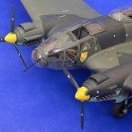
HI Guys After finishing my Dragon BF-110 for the multi engine group build i decided to start on this beauty Trumpeter 1/24 BF-109G-6 Maketar paint mask JG 53 yellow 7 Master Barrels MG-131 I started the build with the engine on the side line i prepared and painted the exhaust with Alclad manifold While working on the cockpit i decide i wanted to try making some seat belts Using Champagne bottle foil and some small copper wires i came up with this. i know they are not perfect but i'm quite happy for a first time Next up will be the cockpit and the side walls Thank for looking
-
 Time to move on from my last build, Airfix's 1/24 Me Bf 109 E-4 http://forum.largescaleplanes.com/index.php?showtopic=69743&hl= to the next of my planes from childhood, the Airfix 1/24 Hurricane Mk1. Before I start, confession time. I never actually built this in my formative years. I did the Spit, 109, Ju87 but never the Hurri. I don't know why, perhaps other things got in the way as I would have been a teenager by then. So, this is a learn as I go along thing (nothing new there then ) I picked the kit up on eBay and it a good old example contemporary with my formative years. The box art on these kits still impresses me and the little book as opposed to a sheet of instructions all added to making it feel a bit better than a normal run of the mill kit As any of you who were kind enough to look at my log for my previous build, you'll realise that David Bailey I ain't but I've looked at some of the excellent posts and articles on LSP and hopefully I've improved a bit on the pictures here. Let me know As ever for me I've started with the engine. My old photo skills are (non) evident in these early shots but they just show the first couple of stages after gluing the mighty Merlin together I'm still unashamedly an enamels man so I started with a black base coat of Humbrol mixed with a little gunmetal to try and give a metallic effect These two are thankfully the last with my old camera and the auto setting. Next came the coat of satin varnish and a dry brush with Humbrols 27001 aluminium to give a little wear then an oil wash of burnt umber with a little lamp black added to try and simulate some oily grime in the nooks and crevices. I used some reference pics of various Merlins but you have to be really careful, I've realised to get the right ones or you end up putting all manner of bits and bobs on to enhance the look that really shouldn't be there. So a couple of the reference pics have various bits not evident on the Airfix engine, although I think it's a lovely but of plastic, so much better than the one on the Spitfire but there were quite a few years between those models. I added some extra wiring and cut off the spark plug connectors on the ignition harness as they looked awful. I used the 0.8mm resin connectors from Hobby Design painted silver, drilled into the engine body with my trusty microdrills and then hooked the lot up with 0.3 mm lead wire painted a suitable colour. Fiddly but I think it looks OK Looking at these pics I can see I need to redo the coiled pipe into the supercharger. It's thin brass wire wound around a core of thicker wire but I then slid it off the core and as I've bent it into shape is parted. The core needs to go back in to give it strength, I think. Very uncertain as to how much to do to the top section. I'm no Merlin expert but there are images with extra ignition wires etc going into the top but then others with nothing. I'm presuming they're different models of engine. I don't want to **** it up by adding stuff that shouldn't be there so any advice would be most welcome Hope the pics look better than my previous efforts. I'll post updated when I've fixed the coiled pipe and hopefully got some feedback on how far to go with the top section. Thanks for taking the trouble to have a look.
- 21 replies
-
- 6
-
-
- hurricane Mk1
- airfix
- (and 3 more)
-
So here's the finished article, up for scrutiny. Gulp!! Link to the build is here for anyone interested. Thanks for taking the time to have a look, any comments, criticism etc. is always welcome
- 4 replies
-
- 9
-
-
- messerschmitt
- 1/24
- (and 2 more)